
Do you know what really separates a great smart watch from an average one?
Most people compare screen size, battery life, or price. But after years of designing and manufacturing smart watches for customers around the world, we’ve learned that the biggest differences are often the ones you can’t see.
The real difference lies in the quality of the sensors, the accuracy of the health data, the durability of the hardware, and the long-term software support. These are the factors that determine whether a smart watch becomes a reliable everyday companion—or just another gadget left in a drawer.
In this guide, we’ll share the same principles we use when developing smart watches, helping you understand what truly matters before making your next purchase. Whether you’re buying your first smart watch or sourcing products for your business, this guide will help you make a smarter decision.
1. Display: AMOLED vs. TFT
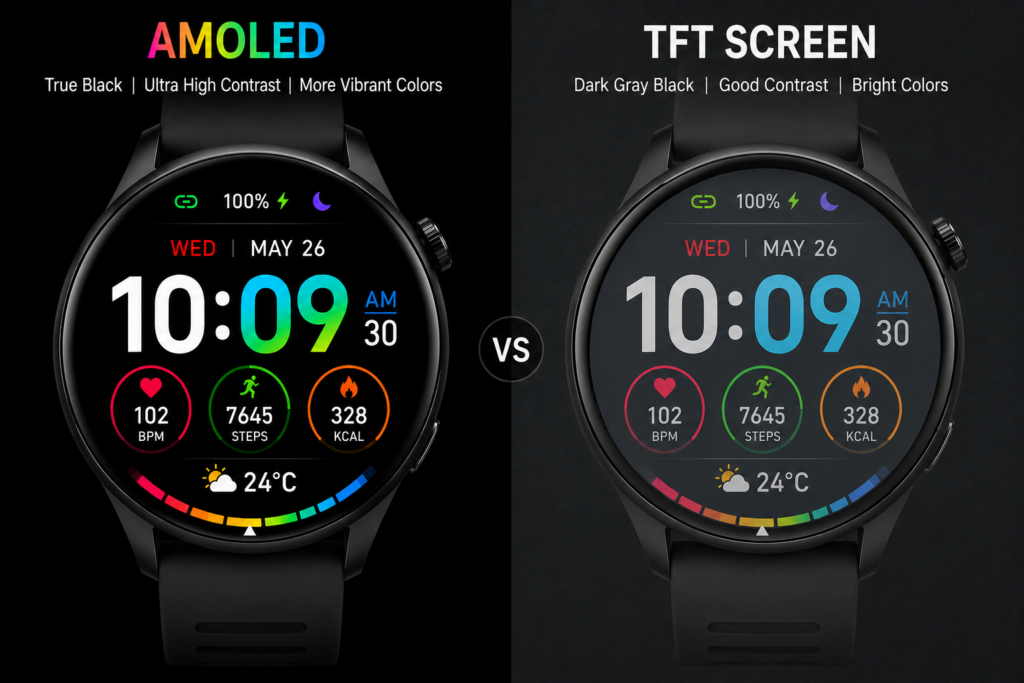
The display is the feature users interact with most, and it’s also one of the largest cost differences between entry-level and premium smart watches.
AMOLED displays offer vibrant colors, true blacks, higher contrast, excellent outdoor visibility, and lower power consumption—especially when using an Always-On Display.
TFT displays are more affordable but generally provide lower contrast, less vivid colors, and higher power consumption. They are commonly used in entry-level smart watches where cost is a higher priority.
2. Sensors and Features
A smart watch is much more than its appearance. The quality of its sensors and internal hardware determines how smoothly it performs and how accurately it tracks your health and activities.
SoC (System-on-Chip)
The SoC is the “brain” of a smart watch. It controls system performance, power efficiency, and the speed of every interaction.
A capable SoC delivers smoother navigation, faster app launches, more stable Bluetooth connectivity, and more accurate processing of sensor data, while also improving overall battery efficiency.
Bluetooth Connectivity
Bluetooth is the foundation of every smart watch. It connects the watch to your smartphone for notifications, Bluetooth calling, data synchronization, music control, and voice assistant functions.
Newer Bluetooth versions generally provide more stable connections, lower power consumption, and greater communication range.
Cellular Connectivity (SIM / eSIM)
Some premium smart watches support a physical SIM card or eSIM, allowing them to connect directly to a mobile network without a smartphone. Although this increases hardware complexity and cost, it enables independent phone calls, messaging, internet access, and GPS navigation.
This feature is especially useful for runners, outdoor enthusiasts, children, and users who prefer leaving their phones behind.
PPG Sensor and Motion Sensors
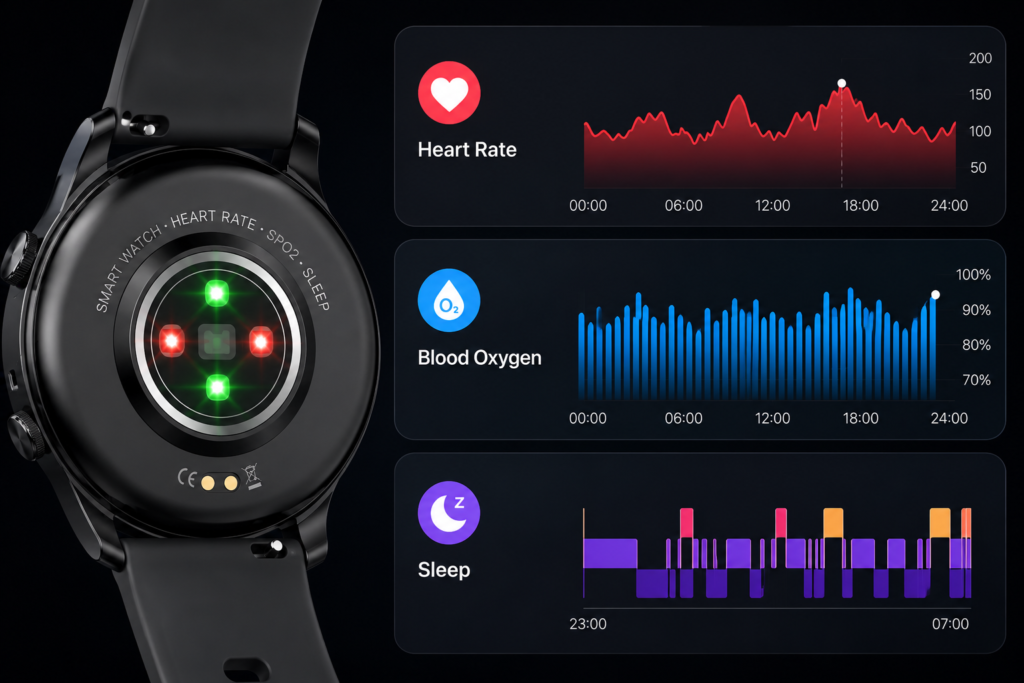
The PPG (Photoplethysmography) sensor and accelerometer are the core hardware behind most health and fitness features on a smart watch.
Their quality directly affects the accuracy of heart rate monitoring, blood oxygen (SpO₂) measurement, sleep tracking, step counting, activity recognition, and workout statistics. Combined with well-optimized algorithms, high-quality sensors deliver more accurate data and more reliable health insights.
Built-in GPS, Compass, and Barometer
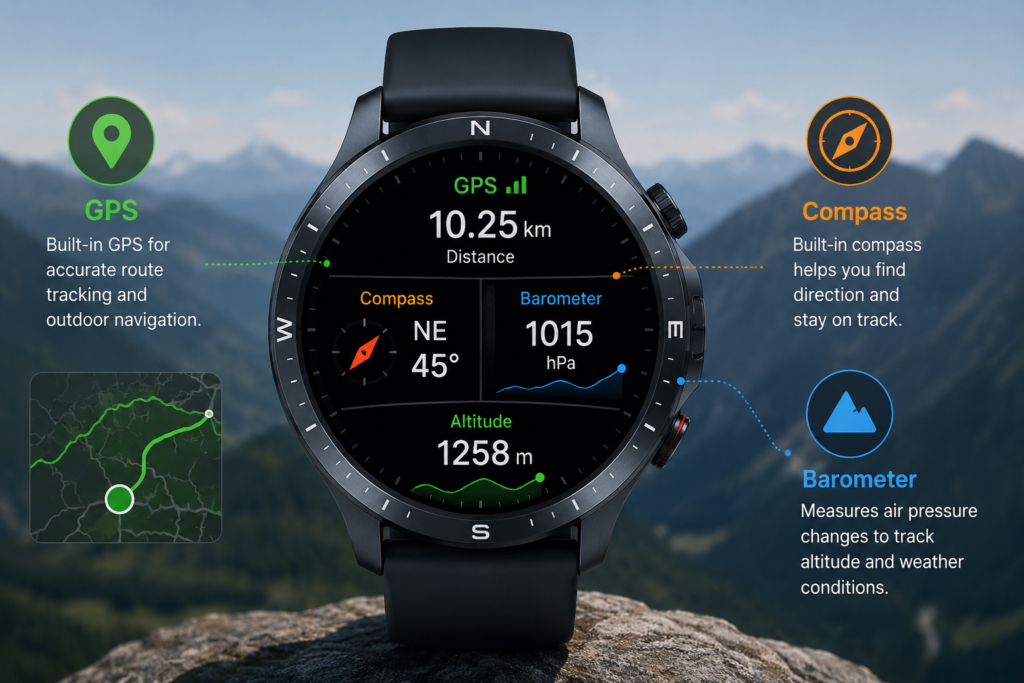
These sensors are designed for users who spend time outdoors.
Built-in GPS enables accurate route tracking without carrying a smartphone, while a digital compass and barometer improve navigation and elevation tracking during hiking, trail running, and other outdoor activities.
3. Battery Life and Charging
Battery life may not significantly increase the manufacturing cost of a smart watch, but it has a major impact on the user experience. A watch that lasts five to seven days on a single charge is far more convenient than one that needs charging every night—especially when traveling or during busy workdays.
Features such as Always-On Display, Bluetooth calling, and built-in GPS can significantly increase power consumption. Fast charging is another valuable feature, allowing users to quickly recharge the watch before heading out and reducing charging interruptions throughout the day.
4. Water Resistance
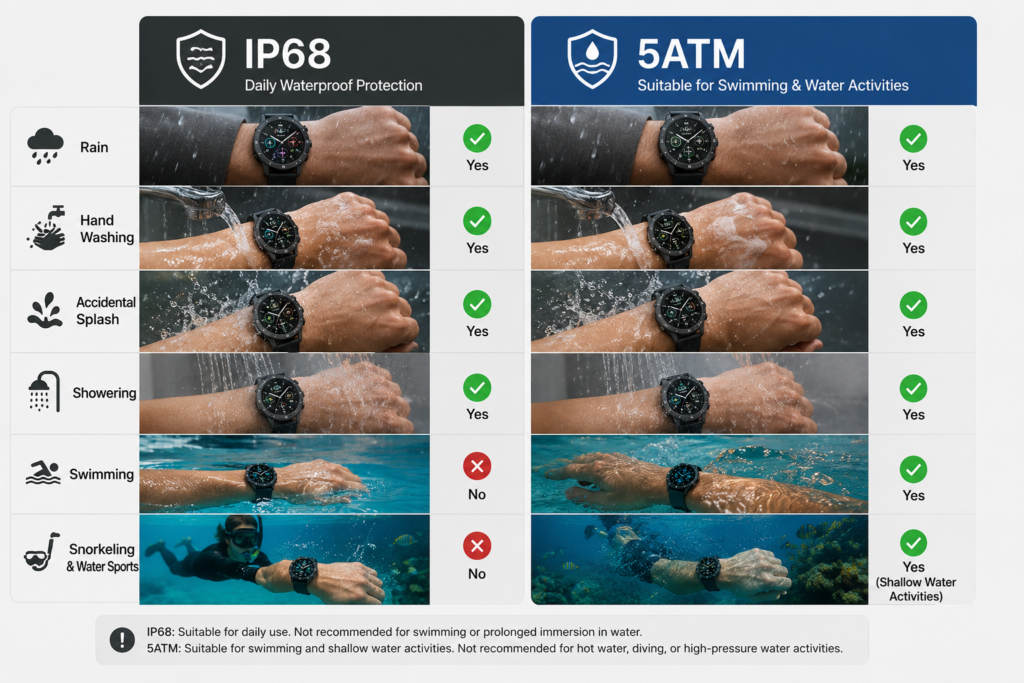
Reliable water resistance is achieved through careful engineering rather than certification alone. It requires precision sealing around the display, buttons, microphone, speaker, and back cover, together with waterproof gaskets and rigorous testing during production.
For everyday use, IP68 provides protection against dust, rain, hand washing, and accidental immersion. 3ATM offers greater resistance to everyday water exposure, while 5ATM is generally recommended for swimming and other regular water activities.
5. Software Support and OTA Updates
Hardware is only part of the experience. Software determines how enjoyable a smart watch remains over time.
Developing a reliable smart watch often requires months of software optimization before launch, followed by continuous maintenance afterward. Manufacturers that regularly provide OTA (Over-the-Air) updates can improve system stability, optimize battery life, fix bugs, introduce new features, and maintain compatibility with newer smartphones.
A smart watch with long-term software support will usually deliver a smoother, more reliable experience and remain useful for years to come.
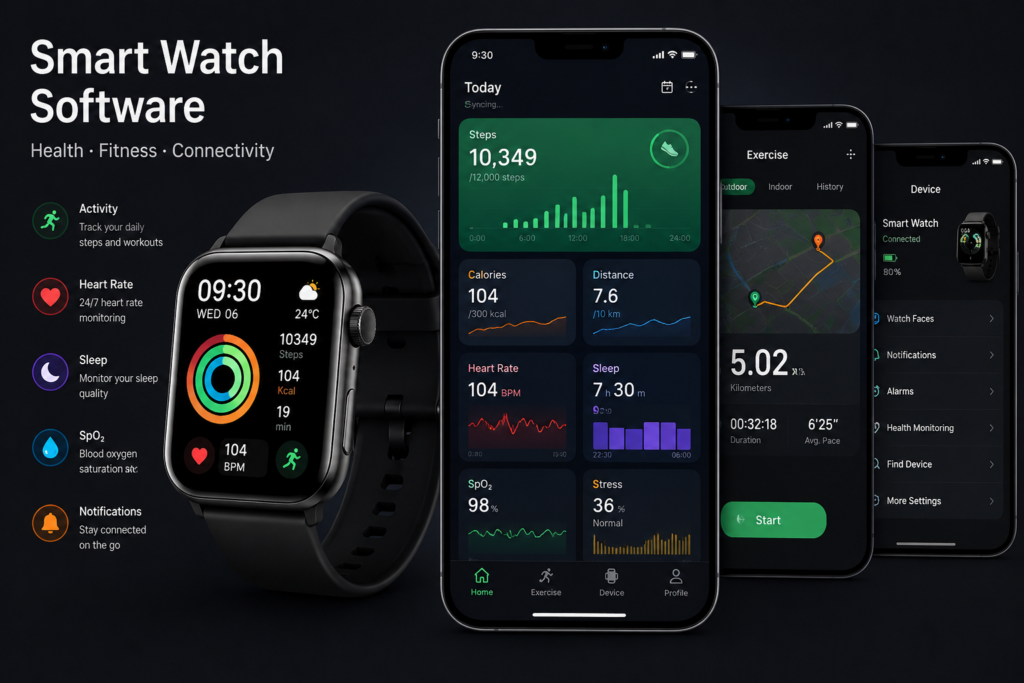
Choosing the right smart watch isn’t about finding the one with the longest specification sheet or the most fashionable design. It’s about finding the right balance between display quality, hardware performance, battery life, durability, and software support. As a manufacturer, we believe these are the factors that truly determine a smart watch’s long-term value.
We hope this guide has given you a clearer understanding of what matters most when choosing a smart watch. Whether you’re looking for a reliable everyday wearable or sourcing your next OEM/ODM product, making an informed decision today will lead to a better experience tomorrow.